TikTok says 94% of Billboard Global 200 entrants went viral on its app first, up from 84%
The 2026 Music Impact Report, prepared by Luminate, ties TikTok to chart life and paid streaming. The data comes from TikTok, and the causal link is untested.
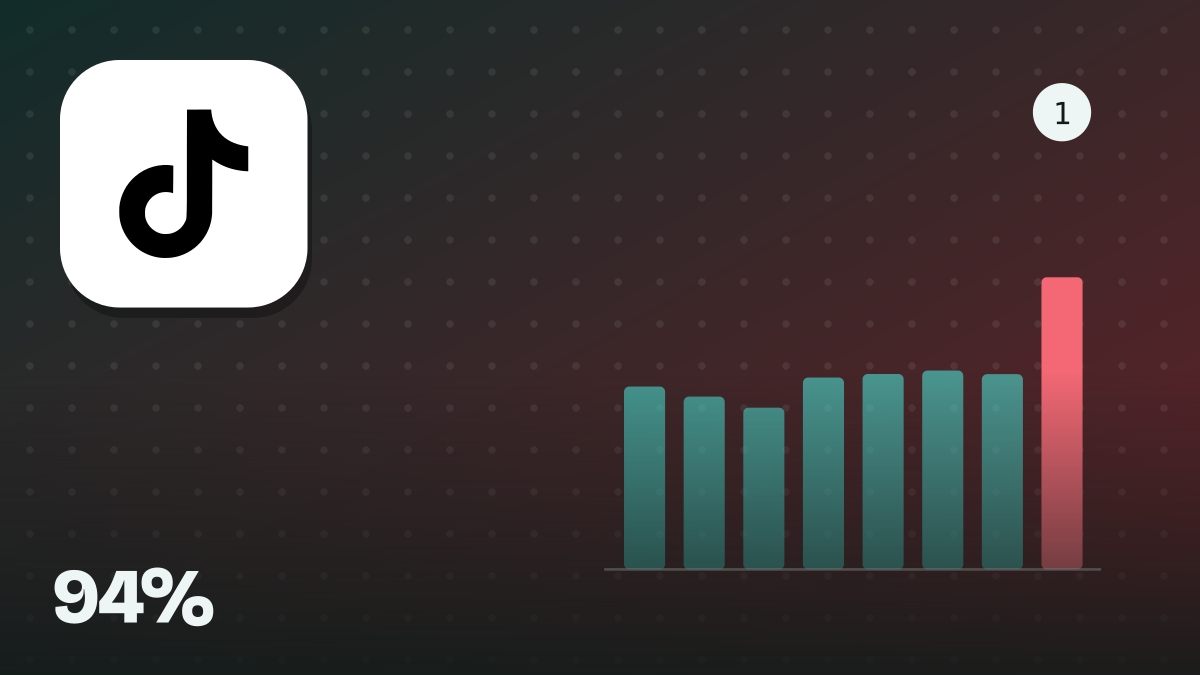
TikTok says 94 percent of the songs that entered the Billboard Global 200 in 2025 had gone viral on its app before they charted. The figure, from the company's 2026 Music Impact Report, was published on November 18 and is up from 84 percent in the previous edition. TikTok commissioned the report, and the data analysis was done by Luminate.
The claim is the headline of a document that is also an argument for how TikTok should be counted in the music business. It is worth reading for both what it measures and what it leaves out.
What the 94 percent counts
The chart analysis covers March 11 to December 4, 2025. After removing Christmas and holiday songs, it looks at 484 titles. Of those, 94 percent had a TikTok viral moment before charting, 5 percent had one at the same time or later, and 1 percent had none tied to their chart run. The last group was 4 percent a year earlier. TikTok supplied the virality data.
Songs with a viral moment averaged eight weeks on the Global 200, against two weeks for songs without one, in a narrower sample of 454 titles. Their median peak position was No. 79, against No. 120. Both gaps are large, though they compare a group that is now almost the whole chart with one that has nearly disappeared.
Tracy Gardner, TikTok's global head of music business development, said every year more of the world's biggest songs start life on TikTok. She put the rise from 84 to 94 percent down to the industry catching up: artists and their teams now build TikTok into a launch from day one, often before a song is out.
The link to streams, and the caveat
Luminate compared TikTok views with US on-demand audio streams across 2025 for 516 artists, which it says account for about two-thirds of US streaming volume. For 43 percent of them the correlation was strong or moderate and positive, up from 33 percent in 2023. Among the fastest growing artists, those whose streams rose at least 20 percent in the fourth quarter of 2025 against a year earlier, the share was 74 percent.
Luminate says correlations across the whole market were effectively unchanged from 2023, and that the 2025 figures cannot be compared directly with last year's analysis because that one used global consumption data and a different method. Gardner accepted that correlation is not cause and effect. Jaime Marconette, Luminate's vice president of music insights, said TikTok's role as a discovery engine is "statistically undeniable".
Music Ally's Stuart Dredge read the same numbers more cautiously: many songs that might chart anyway are running pre-release TikTok campaigns, so a viral moment can be a marketing line item rather than a spark. The report does not try to separate the two.
The case studies show the upside. Pierce The Veil's "So Far So Fake", from 2023, went viral in July 2025, and in the next 12 weeks the band's average weekly US on-demand streams rose 75 percent year on year, adding 113 million streams. Zara Larsson's 2015 hit "Lush Life" returned to charts after a fan danced with her on stage in November 2025.
Who listens, and who pays
Two Luminate surveys of more than 4,000 US respondents aged 13 and over, run in May and June 2026, supply the audience figures. Some 45 percent of US TikTok users say they discover music on the app, against 39 percent of YouTube users, 36 percent of Instagram users and 28 percent of Facebook users.
US TikTok music listeners are 78 percent more likely than the general population to pay for a streaming subscription, up from 68 percent last year. Instagram listeners are 72 percent more likely, and YouTube and Facebook listeners 48 percent. Among TikTok users who listen to music, 61 percent bought physical or digital music in the past year, and they spend 22 percent more on physical formats than the average listener.
The bridge to the paid services is the Add to Music App feature. TikTok said in April 2026 that it had been used to save more than 6 billion tracks to streaming services in the previous 12 months. Gardner said the gap between a discovery on TikTok and a chart-counting stream is small and shrinking. The most-saved track of 2025 on the feature was sombr's "back to friends", which spent more than 80 weeks on the Global 200.
What does each service cost right now? See our streaming price tracker.